

Write. Compete. Win Big.
Online poetry contest & creative writing community for South African writers
All Writing, Spoken Word and Lyrics. All Languages Welcome. Stand a chance to win R1,000 and R500 every week & Get noticed by Shuters for authoring opportunities.
Free to join · Basic R14.99/mo · Elite R49/mo · Cancel anytime · Suitable for all ages
Earn your weekly victory by writing, reading & engaging on the platform.
From the 5 October draw, the weekly and sprint prizes go to writers who've earned all three levels — and nothing before 1 October is counted retrospectively. Everything you do from now counts. Elite subscribers get a 15% prize top-up on wins (R1,150 weekly / R575 sprint).
Writer
Publish 5 pieces of your own writing
Reader
Read for 20 minutes on the platform
Engager
Motivate & encourage other writers — 15 likes & comments on pieces you enjoy
Every two weeks: a new creative theme
Suspense & Thriller · 05 Oct – 18 Oct
Tension, twists and dread — write the piece that keeps hearts racing and won't let go.
Loss & Sadness · 19 Oct – 31 Oct
Grief, goodbyes and the quiet weight of missing someone. Write what loss has taught you.
Tag your piece with the fortnight's theme when you publish to earn an exclusive theme badge — themed pieces get their own Theme Showcase view on the feed (the button next to Recent and Top Liked).
Joining a theme is completely optional and doesn't affect your chances of winning — themed pieces sit on the leaderboard and compete for prizes exactly like every other piece.
Your live progress is always on your Profile — reach all three and every draw is open to you, whatever tier you're on.
Check my eligibilityCHOOSE YOUR TIER
Free poetry submission sites tier — submit poems for prizes or upgrade for cash prize poetry contests.
Free to join. Anyone can win — reach your Writer, Reader & Engager levels to qualify for prizes.
ARE YOU A SCHOOL?
Multi-licence discounts available. Licence CreatiVerse for your classroom or campus with your own school leaderboard, and a R1,000 bi-weekly prize for the highest-ranking piece by a school.
Your words. In print. Couriered to your door.
100 years of Shuters. 100 pieces. One private, non-commercial edition — paid subscribers only. If your work is selected, a printed copy of the inaugural anthology is couriered straight to your delivery address — a real book in your hands to keep forever.
⚡ Weekly Winner
Paid-subscriber winners, 1 Sept – 31 Oct, auto-qualify.
🔵 Blue lightning-bolt
A separate Editor's Choice selection — auto-qualifies.
🏅 Anthology badge
Tells you your piece has made the 100.
Then in November: a writing workshop takes you behind the scenes of the publishing process — the work that turns your words into a printed book.
Not a paid subscriber yet? Time to Subscribe and feel the publishing pressure.
GET PUBLISHED & BUILD YOUR WRITING PORTFOLIO
Get noticed by publishers and learn how to get published as a writer through Shuters Publishers.
A safe space to show your work to the public. Stand out and get noticed by Shuters — one of South Africa's leading publishers. Your best work could land you a real publishing opportunity alongside the cash prizes.
HOW CREATIVERSE WORKS
1. Write or Record
Type your piece of Writing, snap a photo or record your voice. Your original work. No AI allowed.
2. Enhance Your Writing
Use AI to generate backgrounds or upload your own pictures. Extract text from photos, transcribe audio. Run a copyright and AI writing check to ensure your work is original — protecting other authors and the platform from AI generated content.
3. Share & Win
Publish, share to socials, get likes, and climb the leaderboard for cash.
FEATURED PIECES
The letter I never sent
The Letter I Never Sent The letter had been sitting in the bottom drawer for eleven years. Eleven years, three months, and six days. Princess knew because she had counted once. She had counted the years after her mother died, when the house became too quiet and every ordinary object seemed to carry a memory. She had counted the months because grief made time strange. She had counted the days because, for a while, she needed numbers to prove that she was still moving forward. The letter had remained where she left it. Unopened. Unsent. Unforgiven. On a cold Sunday afternoon, Princess finally took it out. She was forty-two now. Old enough to understand that some wounds did not disappear with time. They simply became quieter. She sat at the kitchen table with the letter in front of her. The envelope had turned yellow around the edges. Her handwriting, once dark and impatient, had faded to a dull grey. On the front were three words: For Precious. Princess touched the envelope with her fingertips. "I suppose it's time," she whispered. Outside, rain tapped softly against the windows. The house smelled of dust and old wood. Her mother had been gone for eleven years, yet sometimes Princess still expected to hear her moving around in the kitchen, opening cupboards, complaining about the cold, humming the same hymn she had sung every morning. Her mother's name was Precious. And to Princess, she had been exactly that. Precious. Princess closed her eyes. She could almost hear her. And suddenly, she was twenty-nine again. It had been a Tuesday. Princess had come home late from work, angry and exhausted. She had spent the entire afternoon arguing with her manager and the evening sitting in traffic. When she walked through the front door, her mother was waiting. "You are late," Precious said. "I'm tired." "You didn't answer your phone." "I was working." Precious looked at her for a long moment. "You have been working a lot lately." Princess dropped her handbag onto the chair. "Please don't start." "I am not starting anything." "You always do this." "Do what?" "Make me feel guilty." Her mother's face changed. Not dramatically. Just enough for Princess to notice. "I only asked if you were all right." "I'm fine." "You don't look fine." "Because I'm tired!" The words came out louder than Princess intended. Silence filled the room. Precious slowly turned away. "I made you dinner." "I'm not hungry." "You should eat something." "I said I'm not hungry." Precious nodded. "All right." She walked toward the kitchen. Princess watched her disappear. Something inside her wanted to follow. To apologize. To say, I'm sorry, Mama. Work has been difficult. I'm just tired. Instead, she picked up her handbag and went to her room. That was the last conversation they ever had. Three days later, Precious collapsed. By the time Princess reached the hospital, her mother was already gone. The doctor said it had been sudden. There had been nothing anyone could have done. Princess remembered very little after that. She remembered the hospital corridor. The white walls. Her aunt crying. Someone placing a hand on her shoulder. And most of all, she remembered the last thing she had said. I'm not hungry. For months afterward, the sentence followed her. Sometimes it woke her in the middle of the night. Sometimes it appeared in the middle of a meeting. Sometimes she would be walking through a supermarket and suddenly remember her mother's face. Not the face of the woman she loved. The face of the woman she had hurt. So she wrote the letter. She wrote it at three in the morning. She wrote without stopping. She told Precious about everything she had never been brave enough to say. She apologized. She confessed that she was angry because she was afraid. She admitted that she had blamed her mother for things that weren't her fault. She said she wished she had listened. She wished she had stayed in the kitchen. She wished she had eaten the dinner. Most of all, she wished she had said those three simple words. I love you. When she finished, Princess folded the pages and placed them inside an envelope. She wrote: For Precious. Then she put it in the bottom drawer. She told herself she would take it to the cemetery the next morning. She never did. Now, eleven years later, she opened the drawer again. The letter was still there. Princess held it in both hands. She wondered what she had expected all those years ago. Perhaps she had thought that writing the words would make the guilt disappear. It hadn't. Perhaps she had thought the cemetery would feel different afterward. It didn't. Perhaps she had simply been afraid that once she let go of the letter, she would have to let go of her mother. And she had not been ready. She broke the seal. The paper inside was brittle. Her younger handwriting filled six pages. She began to read. "Dear Precious," She stopped. Her throat tightened. She continued. "I don't know why I'm writing this because I know you will never read it. Maybe that's why I can finally tell you the truth." Rain continued falling outside. "I was angry with you because I was angry with myself. I thought you didn't understand me, but the truth is that I didn't understand myself." Princess wiped her eyes. She kept reading. "You always told me I was stronger than I believed. I never understood what you meant. I thought strength meant not crying. Not needing anyone. Doing everything alone." She smiled sadly. "You were right, Mama. I was wrong." The next paragraph made her stop. "I'm sorry for that Tuesday." Princess lowered the letter. For eleven years she had remembered that night exactly as she believed it happened. She had shouted. Her mother had gone quiet. Then her mother had died. But memory, she realized, was not always truth. Sometimes grief edited the past. Sometimes guilt filled in the spaces. She read on. "I need you to know that when I said I wasn't hungry, I didn't mean I didn't want your food. I meant I was afraid." Princess frowned. She had forgotten that part. "You asked me that morning if I was happy. I told you I was fine. You looked at me like you knew I was lying." Princess stared at the page. She remembered. Barely. Precious had indeed asked her something that morning. Are you happy, my child? Princess had laughed. Of course. But she hadn't been happy. She had been terrified. She had just discovered she was pregnant. She had been planning to tell her mother. Then she had lost the courage. Two days later, before she could say anything, Precious died. Princess had carried the secret alone. The baby had been born seven months later. A little girl. Her name was Joy. Princess had given her mother's name as her second name. Joy had never known her grandmother. But she had grown up surrounded by stories about her. Princess had told her that Precious could sing beautifully. That she made terrible coffee. That she laughed loudly. That she believed every problem could be solved with food. She had never told her daughter about the last argument. She had never told her how guilty she felt. She had never told her about the letter. A sound came from the hallway. "Mum?" Princess quickly wiped her face. Joy appeared in the doorway. She was seventeen now. Tall. Quiet. She had Precious's eyes. "What are you doing?" she asked. "Reading something." "What's that?" "A letter." "From who?" Princess looked at her. For a moment, she saw the little girl Joy used to be. The child who had once climbed into her bed during thunderstorms. Then she saw the young woman standing in front of her. Her daughter. Her future. She held up the envelope. "It was for my mother." Joy walked closer. "Grandma Precious?" Princess nodded. "Did you send it?" She looked down. "No." "Why?" Princess almost laughed. Because the real answer was too complicated. Because grief had made her afraid. Because she had spent eleven years believing that she had missed her chance to say something important. "I don't know," she said. Joy pulled out the chair beside her. "Can I read it?" Princess hesitated. Then she handed it to her. Joy read silently. She took her time. When she finished, she folded the letter carefully. "She sounds like she was a good woman." "She was." "She would've liked you." Princess smiled. "I think she did." "No," Joy said. "I mean... she would've liked who you are now." Princess looked at her. "What makes you say that?" "Because you talk about her all the time." She paused. "And because you talk about me the same way." Princess laughed through her tears. Joy reached across the table and took her mother's hand. "You should have sent it." "I know." "But maybe you still can." Princess looked at the old envelope. "Where?" Joy shrugged. "The cemetery." Princess shook her head. "No." "Why not?" Princess looked toward the rain-covered window. "Because I don't think I need to anymore." Joy smiled. "Then what will you do with it?" Princess folded the letter and placed it back inside the envelope. "I think I'll keep it." "For what?" Princess looked at her daughter. "To remember." Joy nodded. For a while, they sat together without speaking. Then Princess stood. "Are you hungry?" Joy grinned. "Very." She walked toward the kitchen. Behind her, Joy called out. "Mum?" "Yes?" "Make enough for two." Princess stopped. Her eyes filled with tears. For a second, she could hear her mother's voice again. You should eat something. This time, Princess smiled. "Of course." She began preparing dinner. And for the first time in eleven years, the house did not feel empty. That night, after Joy had gone to bed, Princess returned to the kitchen. She opened the drawer. The letter was still there. She took out a fresh sheet of paper. Then she began writing. This time, she didn't write to the dead. She wrote to the living. She wrote to Joy. She wrote about love. About fear. About mistakes. About how sometimes we spend so much time regretting the words we never said that we forget the people standing beside us, waiting to hear them. At the bottom of the page, she wrote: "Don't wait eleven years to say what your heart already knows." She folded the paper. She placed it on the table. Tomorrow, she would give it to Joy. There would be no drawer. No forgotten envelope. No unsent words. Princess turned off the kitchen light. Before she went upstairs, she looked once more at the old letter addressed to her mother. It had never reached its intended destination. But perhaps that wasn't why it had been written. Perhaps some letters are not meant to be sent. Perhaps they are meant to remind us of everything we still have time to say. Princess touched the envelope gently. "Goodnight, Mama." Then she walked upstairs. And left the letter behind.
by Lehlogonolo
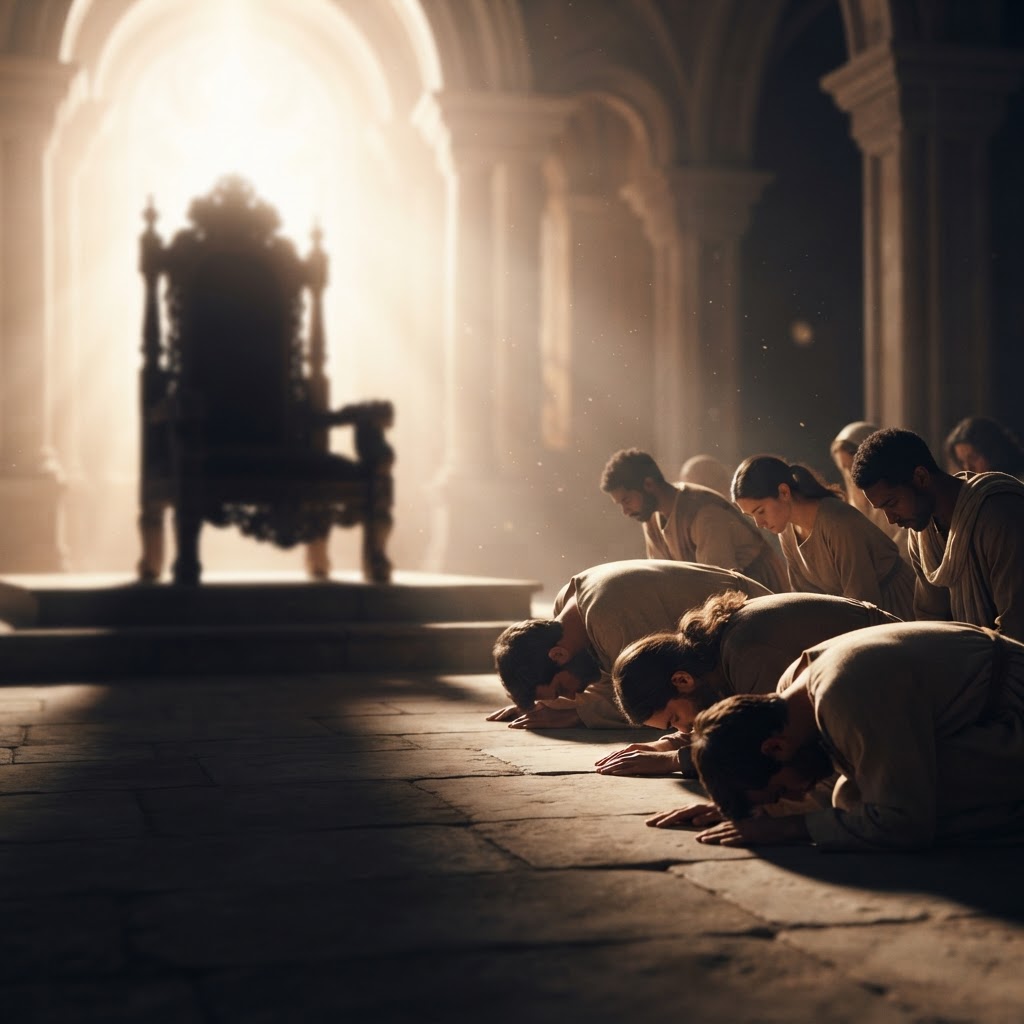
The Decree: At The Right Hand
by Sethu
Pigeons to the Market
Harold and Mary-lou Dornan had farmed forever and a day on a remote farm near the Drakensberg. Although still very active on the farm, they had invested in a cottage at the Ambers which served as convenient ‘lock up and go’ accommodation to use when they needed to over-night on trips to town. Harold and Mary-lou Dornan had always had a pigeon loft at their home which was set on a substantial farm in a picturesque spot near the Drakensberg. When they retired they had no intention of leaving the quaint loft behind so it was uprooted and brought to town with them and erected beside their cottage in the Ambers. No-one had ever erected such an edifice in the Ambers so the act more or less side-stepped the basic rules which governed pets, buildings, garden beds and trees as a pigeon loft fell into none of these categories; so the handsome white mini rondaval-shaped loft on top of the pole took its place in their garden. It evoked much comment and concern as any change does at the Ambers, but fortunately no real complaint! To move them to town, Harold caught the pigeons one night whilst they were roosting in the loft (before it was moved to town) and brought them to town to be kept enclosed in a temporary aviary until they had successfully re-homed. In time, they were released and they immediately made the loft their dormitory at night, fed off their regular crush on the ground nearby and flew spectacular circuits around the town as regular exercise. They soon found that they’d moved to the land of plenty, for many of the residents fed the birds; so they flew the town and returned to several different tables throughout the day to keep their crops topped up! Soon they began to flock with the town’s pigeons and some of these made the new loft their home as well. With fewer raptors around town and no cats allowed in the complex they flourished and the small initial flock soon grew to a sizeable number. It was breathtaking to see the Amber flock join up with the town flock just before the sun crept over the horizon in the east and make swift sweeping circuits above the town against the dawn sky before dropping down as if on one command to feed once the sun was up. Harold broke the cap off his boiled egg one morning and looked across the table at Mary-lou. “We are going to have to do something about these pigeons, Mary-lou,” he said. The singing of air passing through the wings of over a hundred pigeons circling at 100kph overhead could be clearly heard in the silence that followed. “The flock has grown to over a hundred birds and needs to be thinned out. There are the beginnings of a rumbling of complaints from around the complex about them roosting all over now as the loft is too small and before it turns ugly I think we should do something about the numbers.” “How are you going to do that?” asked Mary-lou. Remembering the organised bird shoots they used to have on the farm to keep the numbers of wild pigeons and guinea fowl down to an appropriate level, she added, “There’ll be hell to play of you shoot them!” “Oh, no, I wouldn’t do that at all!” he replied, egg in spoon paused halfway to his mouth, “Security would have my guts for garters. I’ve found out that we can send them off to the market in Durban where they will be auctioned off.” “Will you have to catch them and drive them down there in the bakkie?” asked Mary-lou as she tinkled the spoon in her teacup to dissolve the sugar. “No, no. I can have them collected by courier and sent down – it’s all organized by the Poultry Breeders Association who do the collection and delivery to the monthly market where they get auctioned off. Then we receive the cheque by post or courier delivery.” He paused and popped a piece of toast into his mouth and chewed a few times before saying, “All we have to do is catch the ones we want to send off and crate them; and the rest is done by the Association. I will simply catch them at night whilst they are roosting - like we did when we brought them here from the farm” “How many will you send off?” she asked as she scooped marmalade. “What do you think? Should we bring the population down to about 25 again? That means we will get rid of about 75 or 80 birds.” “That’s fair enough ... gosh, I wonder how much we’ll get for that? Have you any idea?” Harold began to tinkle his cup and replied, “I don’t, but they assure me that it will at least cover the costs of the whole thing.” “Oh, good, then that’s alright. At least we solve the problem at no cost!” “Exactly!” A trip down to the Farmer’s Co-op secured some crates and with the help of his wooden ladder he had the birds crated and ready for collection. The courier service arrived at about 9 the following morning to collect the birds. The following afternoon at just before five o’ clock Harold received a call to say that the pigeons had fetched R1500.00 and the cheque would arrive by courier the following morning. Two days later, Harold and Mary-lou were having their morning tea on their veranda having just got in from banking the cheque when a lone pigeon landed unexpectedly on the lawn. It looked tired and a little bedraggled. Another three landed in quick succession, all in the same state. Mary-lou got up and scooped a handful of crush out of the bin and threw it out for them. They fell upon it ravenously. More pigeons arrived and Mary-lou said to Harold, “They look quite travel worn.” “That’s exactly what they are!” he said. As more and more flew down it had suddenly dawned on Harold what was going on. “These are the pigeons that we sold which have come back!” Within a week the flock was back to over 100 healthy birds, 80 of which were somewhat fitter and a little more world-wise. The following week, Harold again went down to the Farmer’s Co-op and bought crates, got out the ladder in the evening and once more crated 80 birds and sent them off to market. This time he was lucky enough to get R1600.00 ... and again all the pigeons returned within the following two days, along with a cheque in the post! In total, Harold and Mary-lou sold their pigeons four times before they stayed away for good!
by Will


GET NOTICED, GET PAID.
Join CreatiVerse today. Submit your best work and compete for real cash prizes every week.
WORDS FROM OUR WRITERS
Poet_Pomme_de_terre
Dear Reader
Writing has always been an organ only visible to my mind's eye — in the way words come together, and in how I'm meant to deliver them to the world exactly as I envisaged.
Entering the CreatiVerse contest was divinely timed. It came at a moment when I felt like giving up on contests for good. I had lost hope of being supported, and I entered mainly to prove to myself that I really shouldn't try again.
To my pleasant surprise, many women resonated with the words I had written.
I've learned that it's not always about perfect grammar or the perfect word — not if the message gets lost in the technicalities.
I'd like to encourage anyone who feels defeated to listen to that small voice telling them to give it one last try. And one last time again.
There's a platform — a home for you in CreatiVerse.
Mbali Nyabane
Creative Writing Contributor
I would like to give a huge shout out to CreatiVerse as it not only gave me an opportunity to showcase my work but to see just how many people stand by me, from family to friends and fans.
I really enjoyed undergoing this competition. These are the kind of competitions that encourage writers or creative people for that matter not to give up.
Tabana Thoka
Creative Writing Contributor
My experience in entering the competition of the CreatiVerse has been really good. I had a wonderful experience, engaging with different people, competing with different people.
This challenge has shown me that I can achieve whatever I want to achieve. Thank you so much for this opportunity, CreatiVerse.
Brock Yapp
Creative Writing Contributor
I haven't felt the necessity to write as much as I do on this platform. I've written many pieces that I am truly proud of because of the motivation and competition this platform provides. It's great to have such an opportunity.